
Key Takeaways:
- Data centers have become a genuine voting issue. This is no longer just a tech or business story. Voters are paying attention, and it’s influencing election outcomes. The success of governors Sherrill and Spanberger, who campaigned on holding data center operators accountable, shows that candidates who take a clear stance on the issue can win on it.
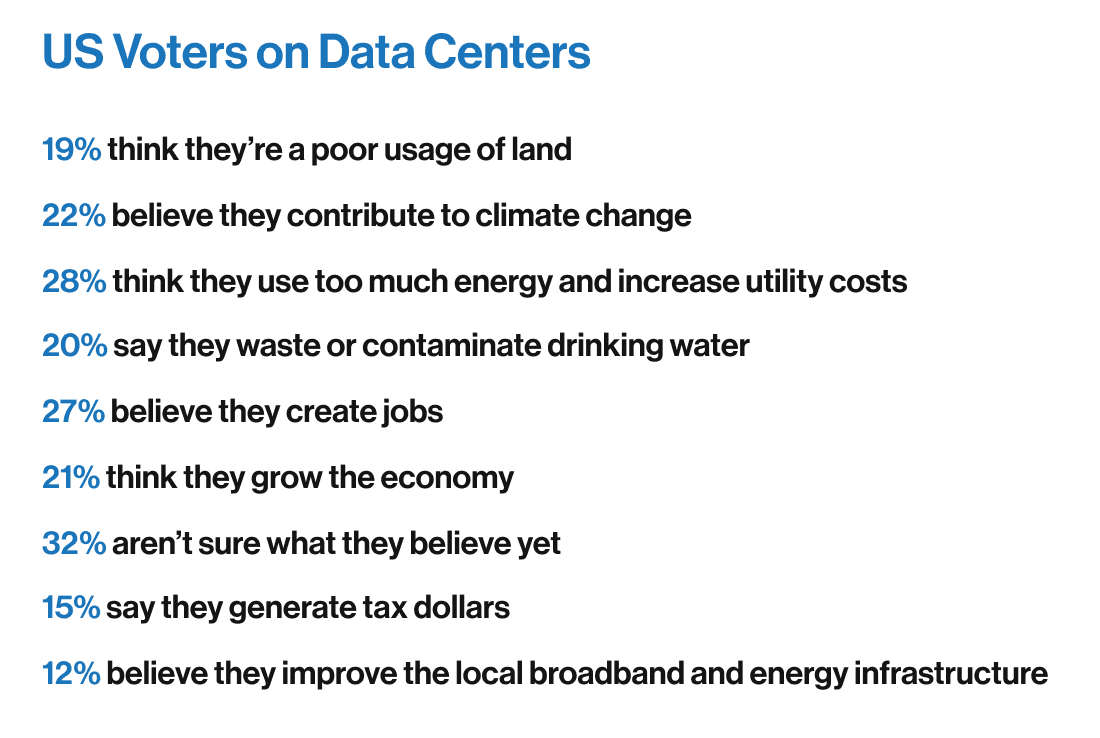
- Voter sentiment is deeply divided and varies by state. Nationally, roughly a third of voters are still undecided, while those who do have opinions are split between economic optimism (jobs, growth) and real concerns about energy costs, water quality, and land use. California and Florida both reflect this tension in different ways, with California voters slightly more economically favorable and Florida voters slightly more worried about utility costs and energy consumption.
- The undecided voter is the biggest opportunity for campaigners. In both states, a quarter to a third of voters don’t yet have a firm opinion on data centers. That’s a massive, moveable audience, and the campaigns that use precise voter intelligence to reach and persuade them first will have a significant strategic advantage heading into any data-center-related race or ballot measure.
Often, US politics can seem to revolve around the same issues ad infinitum. This year, however, a new topic has been thrown into the mix: data centers.
The massive constructions have emerged as a significant political issue and are the center of conversations about everything from land usage to job creation to soaring utility costs. They’re also being built on a mass scale: Virginia is leading the way, with 665 data centers, while Texas comes in at a not-so-distant second, with 413. The complaints about them from area residents have made front-page news. So has their ability to create jobs, the economic benefits they promise, and, of course, the tech giants building them.
So far, two state governors, Mikie Sherrill and Abigail Spanberger, ran successful campaigns in which they promised to have data center operators keep utility costs down and assist with upgrading their respective states’ electrical grids. Both women were victorious, which suggests that data centers are indeed an issue Americans feel strongly about and will vote on. In fact, the beliefs voters have about data centers and legislation regulating their construction and operation could affect their actions at the ballot box, especially if they live near a data center or know someone who does.
Let’s start with what US voters think about data centers:
What Do California Voters Think About Data Centers?
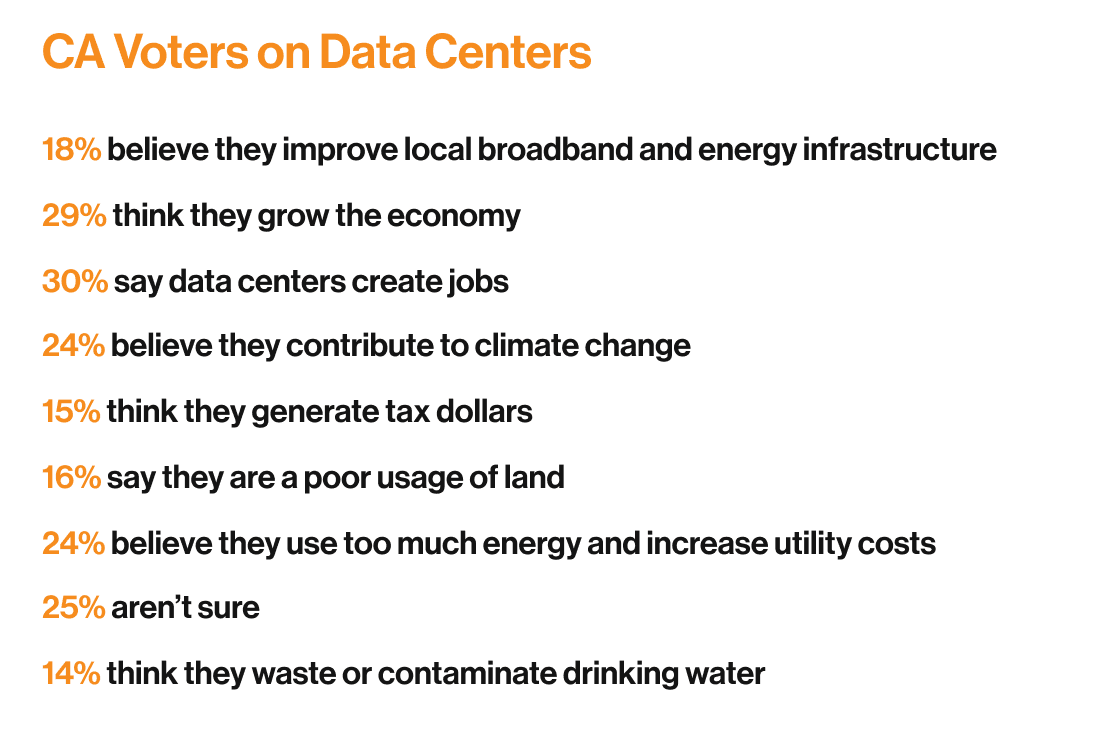
Now, let’s turn to California, where voters will be deciding on five data-center-related ballot measures this year. The Golden State is also home to the third-largest amount of data centers, with 321. Here’s what Resonate’s political intelligence shows about the data center sentiments of 21.1M registered CA voters:
What Does This Mean for Political Campaigners?
Among the state’s 21.1 million registered voters, sentiment is fragmented. Roughly a third see data centers as economic drivers through job creation and growth, while nearly a quarter believe they contribute to climate change or drive up energy and utility costs. That split signals a real messaging challenge: a one-size-fits-all approach won’t work. Campaigners on either side of these measures will need precise audience segmentation to identify and activate the right voters — whether that’s economic optimists, environmental skeptics, or the 25% who are still undecided and very much in play. With this level of nuance in voter opinion, Resonate’s political intelligence gives campaigns the edge to tailor outreach, allocate spend efficiently, and move the needle where it matters most.
How Florida Voters Feel About Data Centers
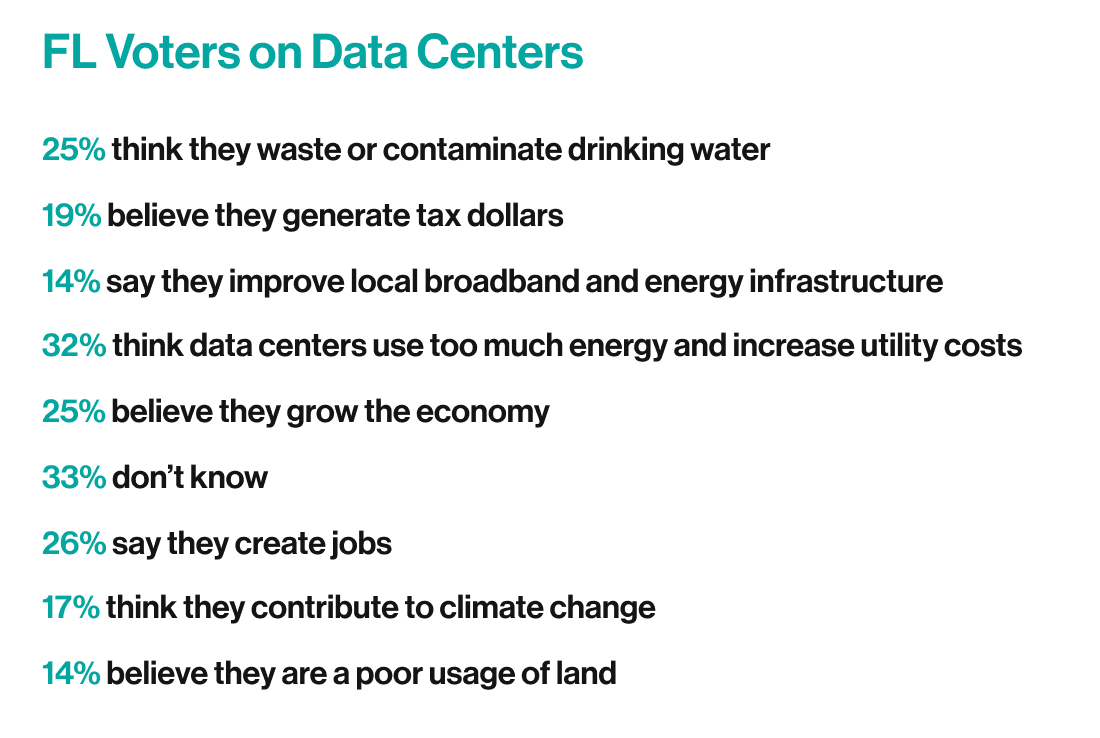
The Sunshine State has 126 data centers and counting. Florida prides itself on being a business-friendly state, and the construction and operation of these centers are viewed as being central to achieving the goals of creating jobs and boosting the state’s economy. What do Florida’s 12.4M registered voters think about them?
What Does This Mean for Political Campaigners?
While roughly a quarter to a third of voters acknowledge the economic upside, those positives are nearly matched by serious concerns: 32% say data centers drive up energy and utility costs, and 25% worry about water contamination. Perhaps most striking for campaigners is that 33% of Florida voters simply don’t know what to think yet — the largest single response in the dataset. That undecided bloc represents a massive persuasion opportunity, and whoever frames the narrative first has a real advantage. For campaigns navigating energy policy, economic development, or environmental issues in the Sunshine State, Resonate’s political intelligence makes it possible to identify, segment, and reach these audiences with the right message — before the opposition does.
Winning over voters starts with having the right data. Resonate offers a whole-human understanding of the US adult voter population that goes beyond the limited, fragmented view offered traditional data providers and the voter file. Want to learn more about how to motivate these groups of voters on this issue, or have a custom audience request? Reach out to a Resonate campaign specialist to get started today.