



Key Takeaways:
- Data centers are a genuinely cross-partisan issue. While national politics often breaks cleanly along party lines, voter concerns about data centers — energy costs, utility bills, land use, and environmental impact — show up across Republican, Democratic, and Independent voters alike. The specific concern varies by state and demographic, but the underlying anxieties are broadly shared.
- The channel strategy matters as much as the message. Across both Florida and California, direct mail and podcasts rank among the most influential sources of election information for these voter segments, which means digital-first outreach strategies will miss a meaningful share of this audience. Campaigns that invest in the channels these voters actually trust will have a structural advantage over those that default to programmatic or social advertising alone.
- Generic economic messaging will not move these voters. Whether the concern is utility costs in Florida or climate impact in California, these audiences are motivated by specific, tangible anxieties, not broad promises about jobs or growth. Campaigns that connect their position on data center development to the precise financial and quality-of-life concerns these voters are already carrying will earn far more traction than those that lead with abstract economic benefits.
Often, US politics can seem to revolve around the same issues ad infinitum. This year, however, a new topic has been thrown into the mix: data centers.
The massive constructions have emerged as a significant political issue and are the center of conversations about everything from land usage to job creation to soaring utility costs. They’re also being built on a mass scale: Virginia is leading the way, with 665 data centers, while Texas comes in at a not-so-distant second, with 413. The complaints about them from area residents have made front-page news. So has their ability to create jobs, the economic benefits they promise, and, of course, the tech giants building them.
So far, two state governors, Mikie Sherrill and Abigail Spanberger, ran successful campaigns in which they promised to have data center operators keep utility costs down and assist with upgrading their respective states’ electrical grids. Both women were victorious, which suggests that data centers are indeed an issue Americans feel strongly about and will vote on. In fact, the beliefs voters have about data centers and legislation regulating their construction and operation could affect their actions at the ballot box, especially if they live near a data center or know someone who does.
What Do California Voters Think About Data Centers?
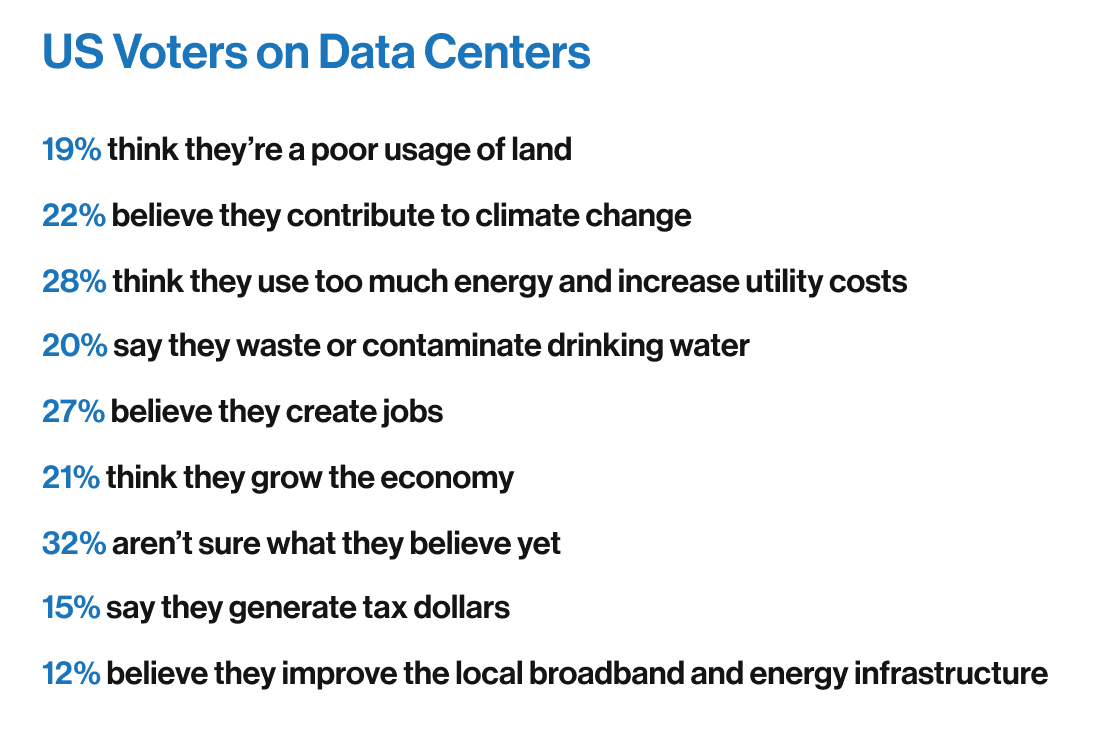
Now, let’s turn to California, where voters will be deciding on five data-center-related ballot measures this year. The Golden State is also home to the third-largest amount of data centers, with 321. Twenty-four percent of CA’s 21.1M registered voters believe data centers contribute to climate change. Let’s take a deeper dive into the underlying sentiments and motivations of this group.
This group is evenly split between males and females, and they’re skewed across all age groups 18 and up. Their top personal values include caring for nature, having the freedom to be creative, and accepting those who are different. When it comes to political party affiliations, Resonate’s political intelligence shows:
- 57% support Democratic Party platforms
- 24% support Independent platforms
- 16% support Republican Party platforms
Here are the most influential sources of election information for this group of voters:
- Advertisements they get in the mail
- Podcasts
- Print/online newspapers
These 4.8M voters are extremely concerned about affordability and the environment, and the actions taken by leadership on Capitol Hill are worrying them. Resonate’s political intelligence reveals:
- 44% are worried about poor leadership in the US government
- 40% are concerned the federal government will cut necessary services or funding
- 40% fear an economic slowdown or a recession
- 37% are worried about corruption in the federal government
- 33% are concerned about the environment, especially climate change
- 32% say rising fuel/oil/energy prices are a concern
- 30% are worried about their taxes increasing
What Does This Mean for Political Campaigners?
For any campaign with a position on data center development in a state where five related ballot measures are on the table this year, the strategic imperative is clear: generic economic or jobs messaging will not move this audience. Credible, specific commitments on energy impact, utility costs, and climate accountability — delivered through direct mail, podcasts, and print media, the channels this group actually trusts — are what earn attention and, ultimately, votes.
How Florida Voters Feel About Data Centers
The Sunshine State has 126 data centers and counting. Florida prides itself on being a business-friendly state, and the construction and operation of these centers are viewed as being central to achieving the goals of creating jobs and boosting the state’s economy. But Resonate’s political intelligence shows 32% of Florida’s 12.4M registered voters think data centers use too much energy and increase utility costs. Let’s take a deeper dive into the motivations, sentiments, and behaviors of this group.
A slight majority (53%) of these voters are female, and 40% are 65+ years of age. Their top personal values include obeying laws and fulfilling obligations, being reliable and trustworthy, and experiencing safety in oneself and family. As for the political party affiliations:
- 43% support Republican Party platforms
- 31% support Democratic Party platforms
- 24% support Independent platforms
Their most influential sources of information for elections include:
- Advertisements they receive in the mail
- Gut instinct
- Podcasts
These 3.2M voters are concerned about a couple of major topics, including leadership in the federal government and benefits they and others receive, as well as affordability. Resonate’s political intelligence shows:
- 38% are worried about poor leadership in the US government
- 37% are concerned about an economic slowdown or recession
- 35% say corruption in the US government is a major concern
- 34% are worried about healthcare costs or debt
- 32% are concerned the federal government will cut necessary services or funding
- 29% say rising fuel/oil/energy prices are a big concern
What Does This Mean for Political Campaigners?
For these voters, the issue of data centers driving up utility costs transcends party lines. Campaigns need to reach members of this group where they actually consume information and speak to the values that drive them: personal safety and financial security, reliable leadership, and protection of the services and benefits they depend on. A message framed around economic impact and government accountability will land far more effectively with this audience than one built around technology or energy policy alone.
Winning over voters starts with having the right data. Resonate offers a whole-human understanding of the US adult voter population that goes beyond the limited, fragmented view offered traditional data providers and the voter file. For more insights on the issues driving voter behavior at the polls, download our April 2026 Voter Trends Report today. Want to learn more about how to motivate these groups of voters on this issue, or have a custom audience request? Reach out to a Resonate campaign specialist to get started today.