


Every campaign heading into the home stretch of 2026 knows which party they are targeting. The real question is: Do you know how to engage the faction within that party that matters most to campaign results?
The 32.2 million Conservative Republicans and the 16.5 million MAGA Republicans both vote Republican, but they do not share the same concerns, assign blame the same way, or respond to the same message. The 36 million Liberal Democrats and the 4.3 million Democratic Socialists both lean left, but one faction is primarily motivated by institutional anxiety about who holds power and how it is used, while the other is mobilized by a critique of corporate power and a desire to protect the social safety net.
As Election Day draws closer, it’s more important than ever to not only ensure that you’re reaching voters in the right channel, but that you’re engaging them with the right message. This requires a deeper understanding of Americans’ values, behaviors, and motivations than is available in traditional data sources like the voter file.
This blog draws on Resonate’s political intelligence to break down each of the four major voter factions as they stand today: Conservative Republicans, MAGA Republicans, Liberal Democrats, and Democratic Socialists. For each group, you will find the specific concerns driving their behavior right now, where they place the blame for economic pain, how they view the current administration, and what that means for the campaigns trying to earn their vote.
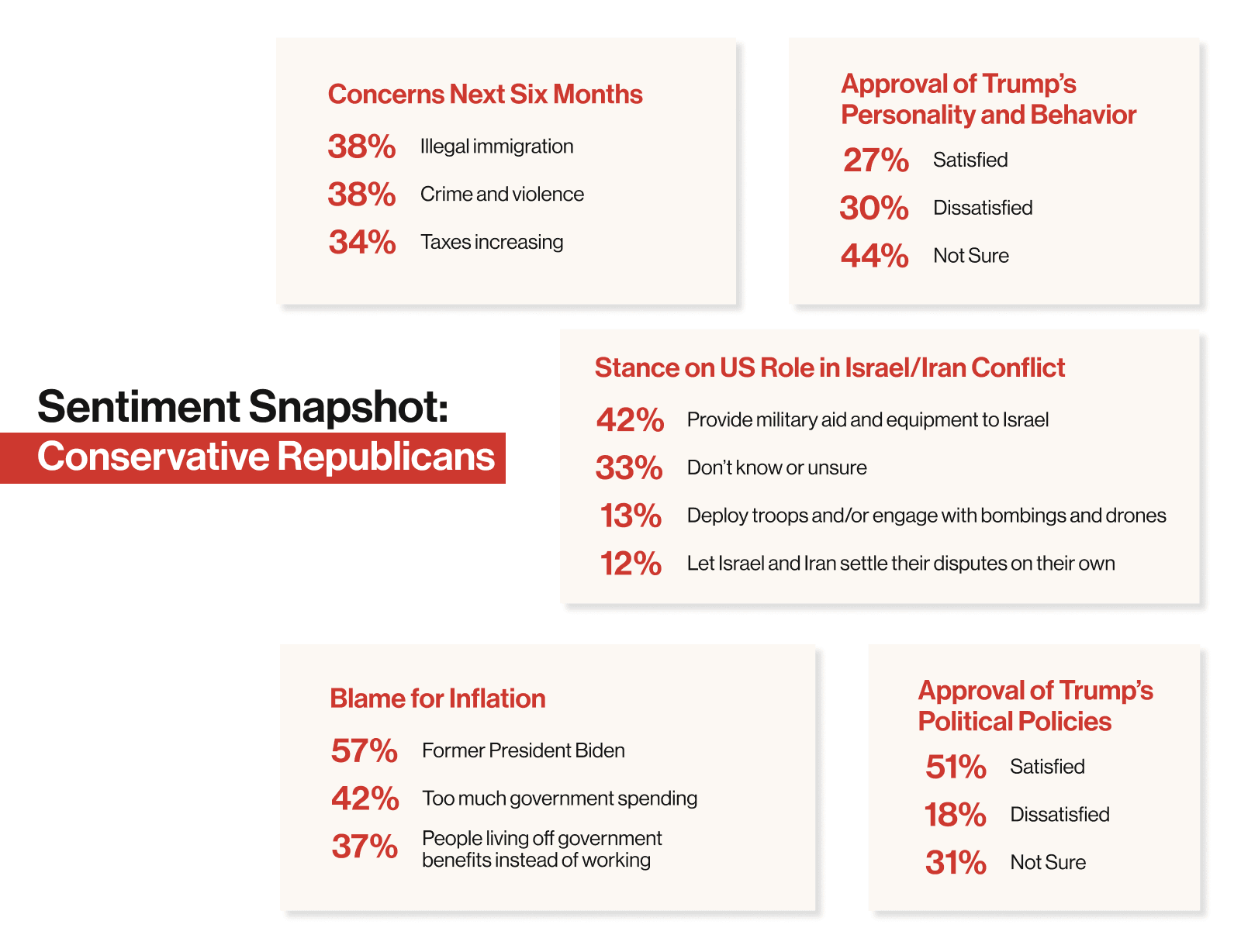
The 32.2M voters who identify as Conservative Republicans feel optimistic about the nation’s direction. For them, areas of concern instead center around illegal immigration, crime, and rising taxes, all of which signal that for this group, economic anxiety and security remain core emotional drivers.
Instead of tying inflation messaging to abstract economic forces, political campaigners should instead focus on the missteps of previous administrations, since the majority of these voters still blame former President Biden and excessive spending. Finally, the data shows that a significant percentage believes the US should take a proactive role in conflicts between Israel and Iran, suggesting national security messaging will also land well with this group.
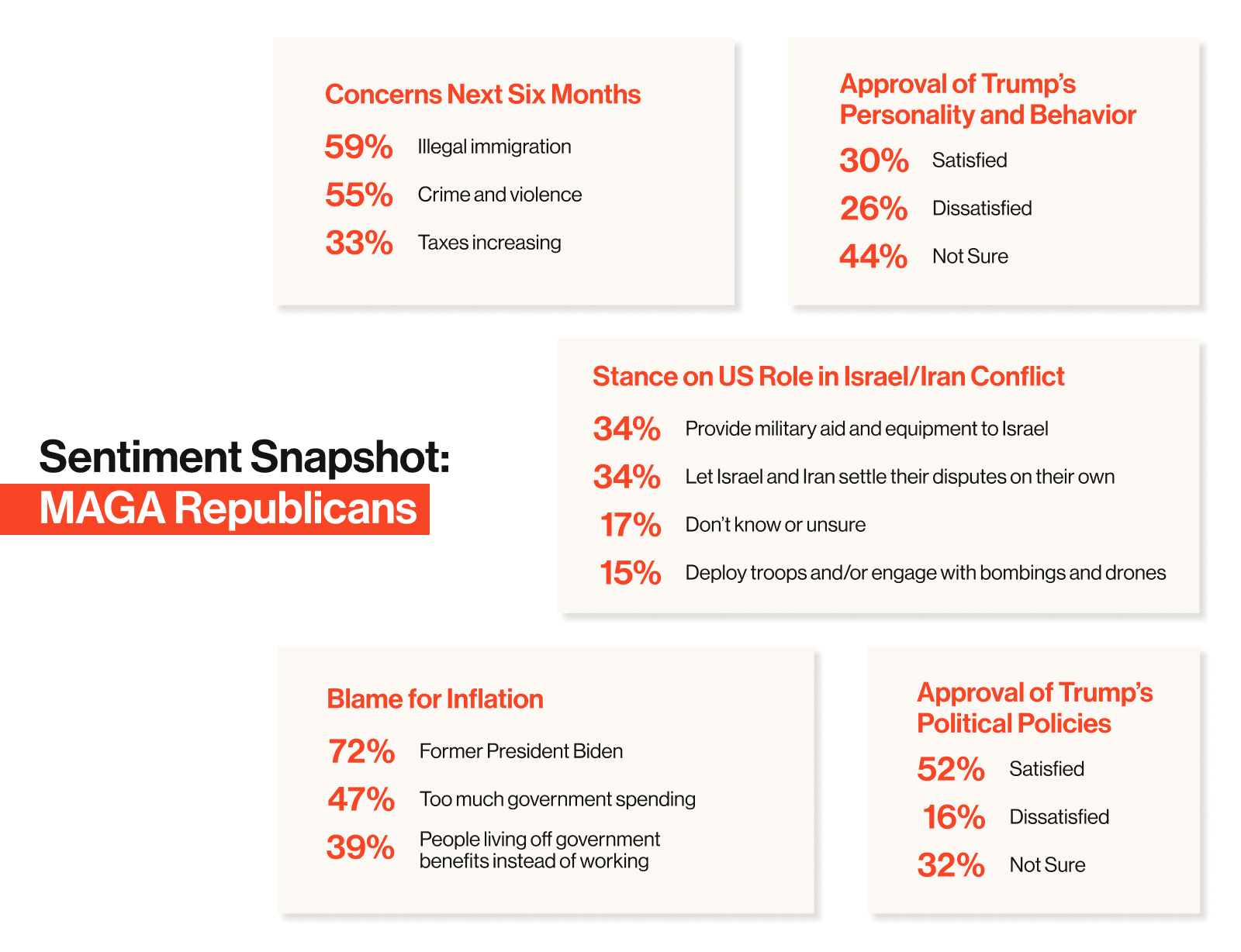
For over half of the 16.5M voters who identify as MAGA Republicans, illegal immigration and crime are dominant concerns for the next six months. As a result, border security and public safety are table-stakes messages for this audience. Their inflation blame is strikingly consolidated, suggesting this group will respond strongly to accountability-driven narratives that name a clear villain rather than vague explanations.
The data also shows that these voters are split when it comes to the role the United States should take in the conflict between Israel and Iran, with equal percentages at each end of the spectrum. Thirty-four percent opt for a proactive approach, while another 34% want to see the nation spending more time focusing on its own interests. This data suggests that national security will mean different things to different people within this faction and that campaigns should be cautious of an overconfident “one-size-fits-all” message on this issue.
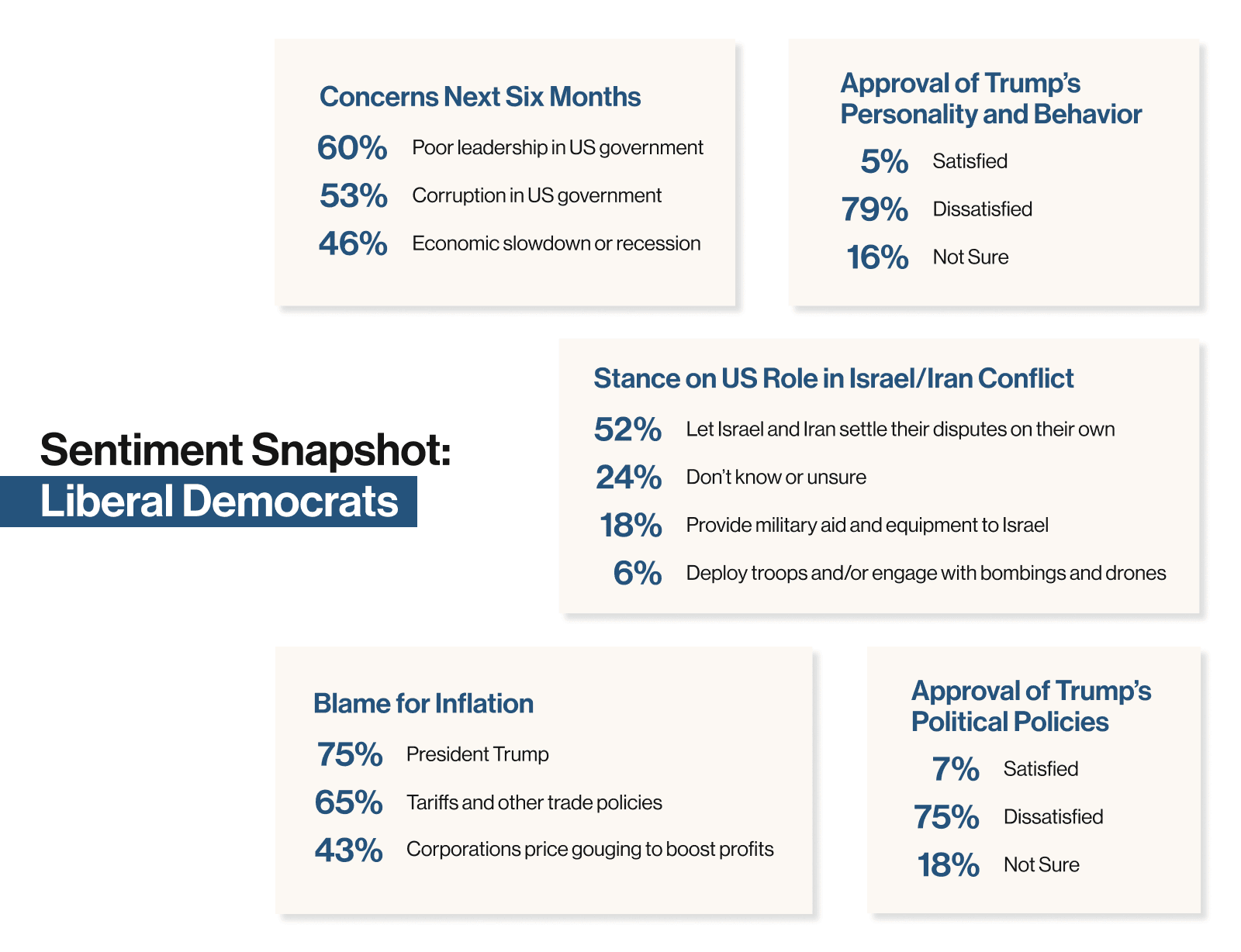
There’s no ambiguity about where the 36M Liberal Democrats stand: They are overwhelmingly dissatisfied with the state of the nation right now. Three-quarters of these voters strongly agree the country is headed in the wrong direction, and dissatisfaction with President Trump sits at near-total levels.
Their top concerns around government leadership and corruption signal that this audience is not primarily motivated by kitchen-table economics alone, but by a deeper institutional anxiety about who holds power and how it is being used. And, much like their counterparts the MAGA Republicans, Liberal Democrats’ inflation blame messaging will land better when economic pain is connected to deliberate political choices by named individuals as opposed to a vague narrative about impersonal market forces.
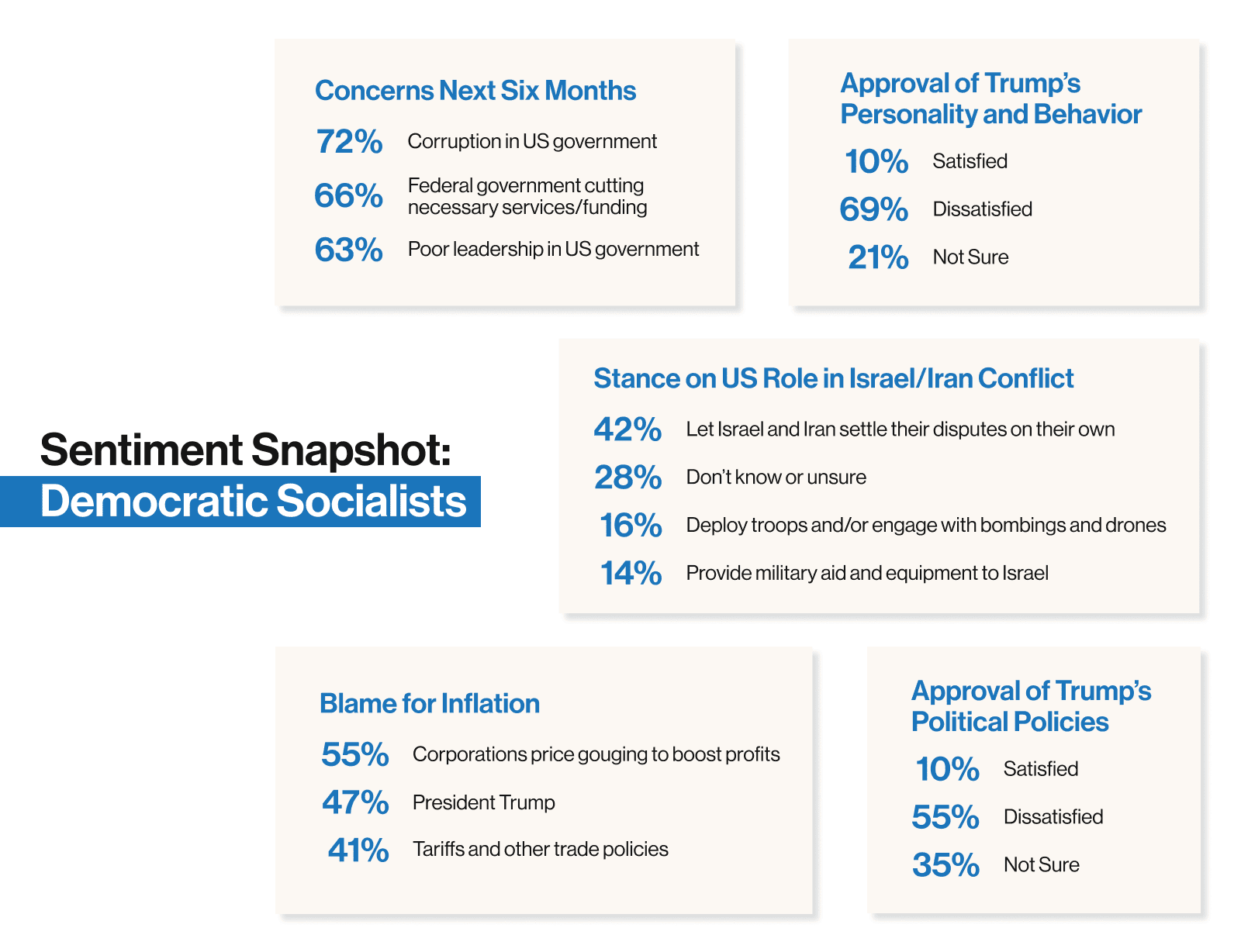
The 4.3M Democratic Socialists are extremely concerned about what’s going on at home, and they want candidates they feel are paying attention to what they and their fellow citizens need. Their top concerns center around government corruption and poor leadership, and their second most-pressing worry reveals that these voters are actively protective of public institutions and view the social safety net as being at risk.
For them, government investment and service preservation is a primary mobilization lever and will help get them to the polls on election day. Corporations and price gouging top the inflation blame list, signaling that this audience will be listening to an economic critique rooted in corporate power rather than purely partisan accountability.
Winning in 2026 Starts with Resonate Political Intelligence
There are lots of data vendors out there. But there’s only one that accurately predicted the results of the last three presidential elections, and that’s us, Resonate. Over our 18 years of existence, we’ve continuously updated and innovated to ensure we have an understanding of the whole person, the whole voter.
Resonate helps political campaigners effectively understand voters and is a crucial component of winning elections in the fast-paced US political arena. Our high-performance voter intelligence not only captures the critical “why” behind voter behavior, it empowers you to recognize the audience, personalize the message, and predict the impact.
Ready to learn more about how our political intelligence will drive campaign results? Schedule a consultation with a data expert today.