
Key takeaways
- Synthetic data works as fast as marketers need, so you can explore new, small, and niche segments without the time and budget traditional research requires.
- Think of research with synthetic data as a funnel. Synthetic handles the many ideas in the early stages, and its role narrows as you move toward final testing.
- Set a rule for stakes. Synthetic is fine for reversible, low-cost decisions, while humans are required for repositioning, major launches, and client sign-offs.
- Use synthetic data to improve the human study itself by pre-testing questionnaires, finding confusing wording, and sharpening hypotheses.
- Agencies should tell clients, in their pitch deck, which results were modeled and which were measured.
The work of brand and agency teams has expanded to cover more than the traditional research budget can handle. That’s why synthetic data has been so beneficial: It works as quickly as marketers need to, allowing you to explore new, small, and niche segments without expending the time or the resources required by traditional research.
At this point, most marketers are aware they still need a human in the process to validate the results synthetic data is providing. But there are still important decisions about designing the best hybrid workflows to combine the new technology with human expertise. In this blog, we’ll review what each stage of the process should like and provide you with some best practices for using synthetic data in conjunction with human expertise, so you get the best from both.
What Approach Should I Take to Research with Synthetic Data?
It’s best to think of research with synthetic data as a funnel. In the early stages, when you have a lot of ideas, you can handle them quickly and inexpensively with synthetic data. As you winnow down your ideas and get into the later stages of testing, the role of synthetic data will narrow. Here are a few best practices:
- Use synthetic early, when you need breadth to surface lots of potential ideas but you also need a quick, effective way to test them so you don’t wind up wasting budget on the wrong ones later.
- Humans come in later, when you commit money and brand reputation.
- In-market performance is measured only with real behavior.
Another way to think of this involves considering where the stakes are higher and where they’re lower. Synthetic data is great for spots where you can easily reverse a decision without much hassle, like when you’re deciding which subject line to test or which of 12 headlines to drop. If the decision is expensive to reverse or will directly affect a major campaign or client outcome, make sure a human is validating the process.
As you consider where to apply synthetic data in your team’s workflow, keep these guidelines in mind:
- Synthetic is fine for reversible, low-cost decisions.
- Humans are required for repositioning, major launches, and client sign-offs.
- Synthetic data makes the human study better before it runs.
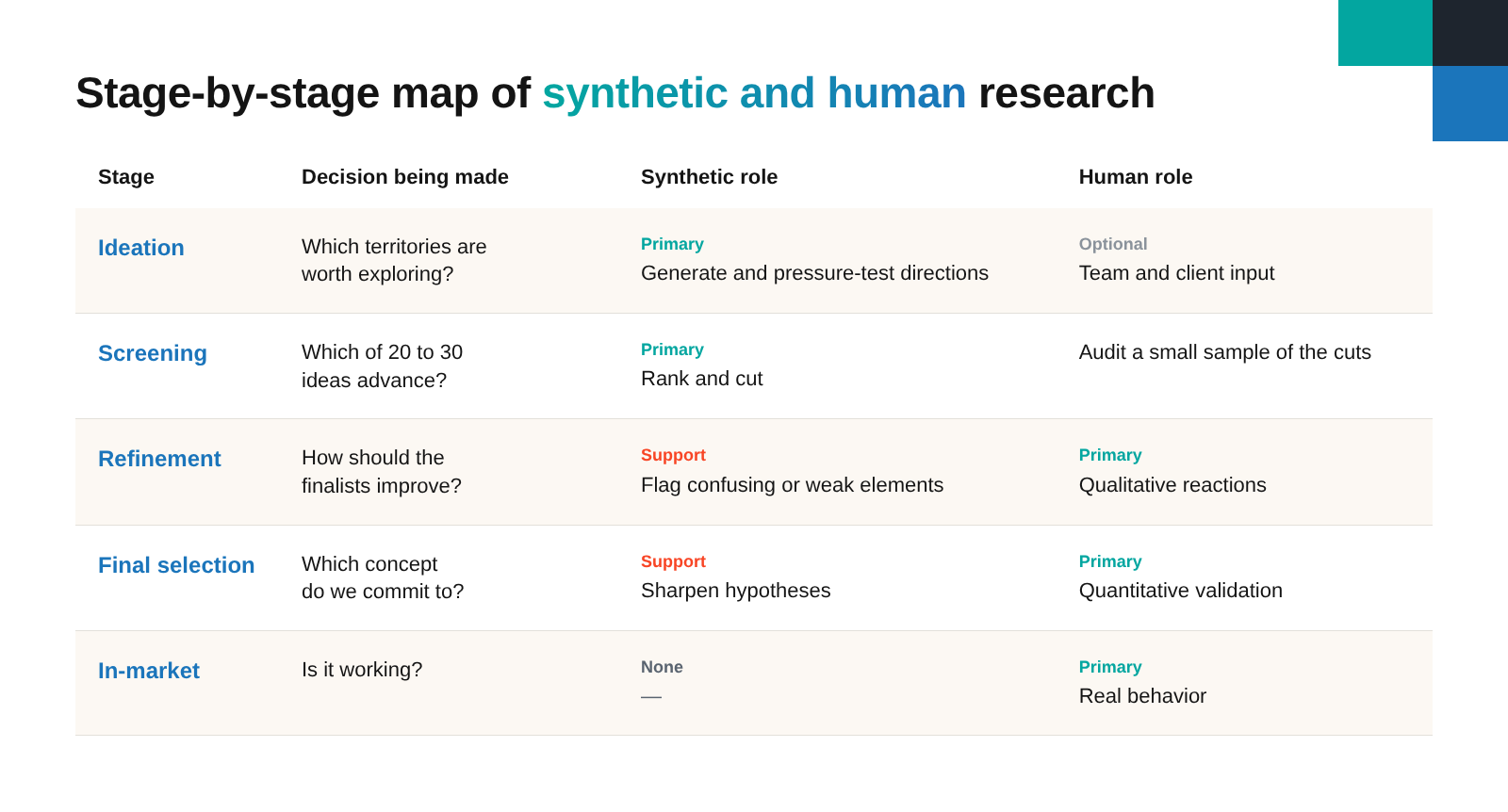
Below, you’ll find a stage-by-stage map of which roles are best for synthetic data and which are right for humans.
 What to Keep in Mind When Incorporating Synthetic Data into Your Workflow
Whether you decide to follow the table or have your own idea for how you want to incorporate synthetic data in your research workflow, there are a few key takeaways to keep in mind. You should:
- Map each stage of the creative and messaging workflow (ideation, screening, refinement, final selection, in-market) to synthetic, human, or both.
- Set a rule for stakes. Synthetic is fine for reversible, low-cost decisions, while humans are required for brand repositioning, major launches, and anything a client signs off on.
- Use synthetic to improve the human study itself by pre-testing questionnaires, finding confusing wording, and sharpening hypotheses.
- For agencies, include a client-disclosure template so decks say what was modeled and what was measured.
Build a Hybrid Research Workflow That Keeps Humans in the Loop
The best way to get the most out of synthetic data is to use it the right way and apply it to the most appropriate use cases in your workflow.
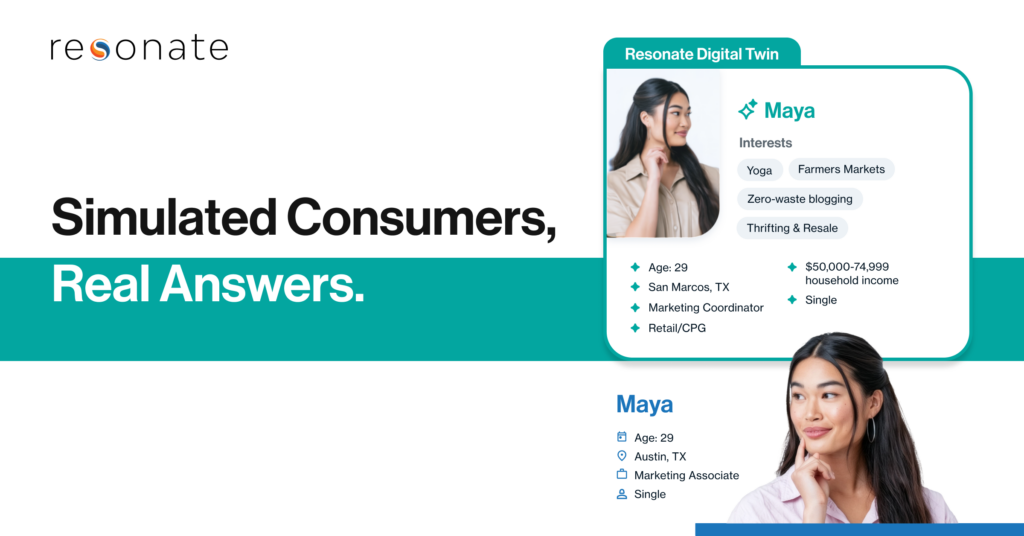
Remember: Synthetic data is only as good as its data foundation. With Resonate Digital Twins, you get on-demand intelligence built on real people, not assumptions. Predict what any consumer will think, feel, or do next, and get back more than an answer. In just five days, you’ll receive a targetable audience spanning the US that you can put media spend behind immediately.
Ready to get a fast, accurate understanding of your consumers? Schedule a consultation with a Resonate data expert today.
Frequently asked questions
What is synthetic data in marketing research?
Synthetic data comes from AI models that simulate how a target audience would respond to concepts, messages, or survey questions. It returns results quickly and at a lower cost than a traditional study.
What is a hybrid research workflow?
A hybrid research workflow uses synthetic data for speed and breadth and human research for validation. Each stage of the creative and messaging process (ideation, screening, refinement, final selection, in-market) is mapped to synthetic, human, or both.
When should I use synthetic data instead of human research?
Use synthetic data early in the funnel and for decisions you can easily reverse, like which subject line to test or which headlines to drop. Bring in humans when a decision is expensive to reverse or affects a major campaign or client outcome.
Can synthetic data replace human research?
No. Humans still need to validate what synthetic data shows, especially for final selection. In-market performance can only be measured with real behavior.
How can synthetic data improve a human study?
Run your draft questionnaire through synthetic respondents before fieldwork. You can catch confusing wording and sharpen your hypotheses before you pay for real respondents.
Should agencies tell clients when they use synthetic data?
Yes. A client-disclosure template makes sure each deck says what was modeled and what was measured, so clients know what a recommendation rests on.