


AI has reshaped digital advertising. Giants like Meta transformed their models towards full ad campaign automation by putting targeting, placement, and bidding decisions directly under the control of artificial intelligence. The goal is efficiency, but many in the industry have also felt some anxiety over the perceived loss of control.
Brands and agencies that rely on sophisticated targeting, custom creative assets, and a highly personalized customer experience are concerned about the potential pitfalls of the move to full automation. These include many of the issues marketing teams work so hard to avoid, like off-brand messaging, wasteful spending, or losing touch with customers and prospects through real-world conversations and insights.
Meta’s move reflects where the advertising industry is heading, but in an increasingly automated world, advertisers are right to ask if AI allows us to target real people with sincere, resonant messaging. Will this shift cost us the control and human touch that differentiates us?
The answers lie in the quality of data you use to train the AI and your team’s capacity to take action. Let’s take a closer look at the ways better data and the expertise to act on it allow you to navigate AI automation and reach your real customers — without losing what makes you special.
How to Make the Shift Towards AI-Powered Advertising Work for You
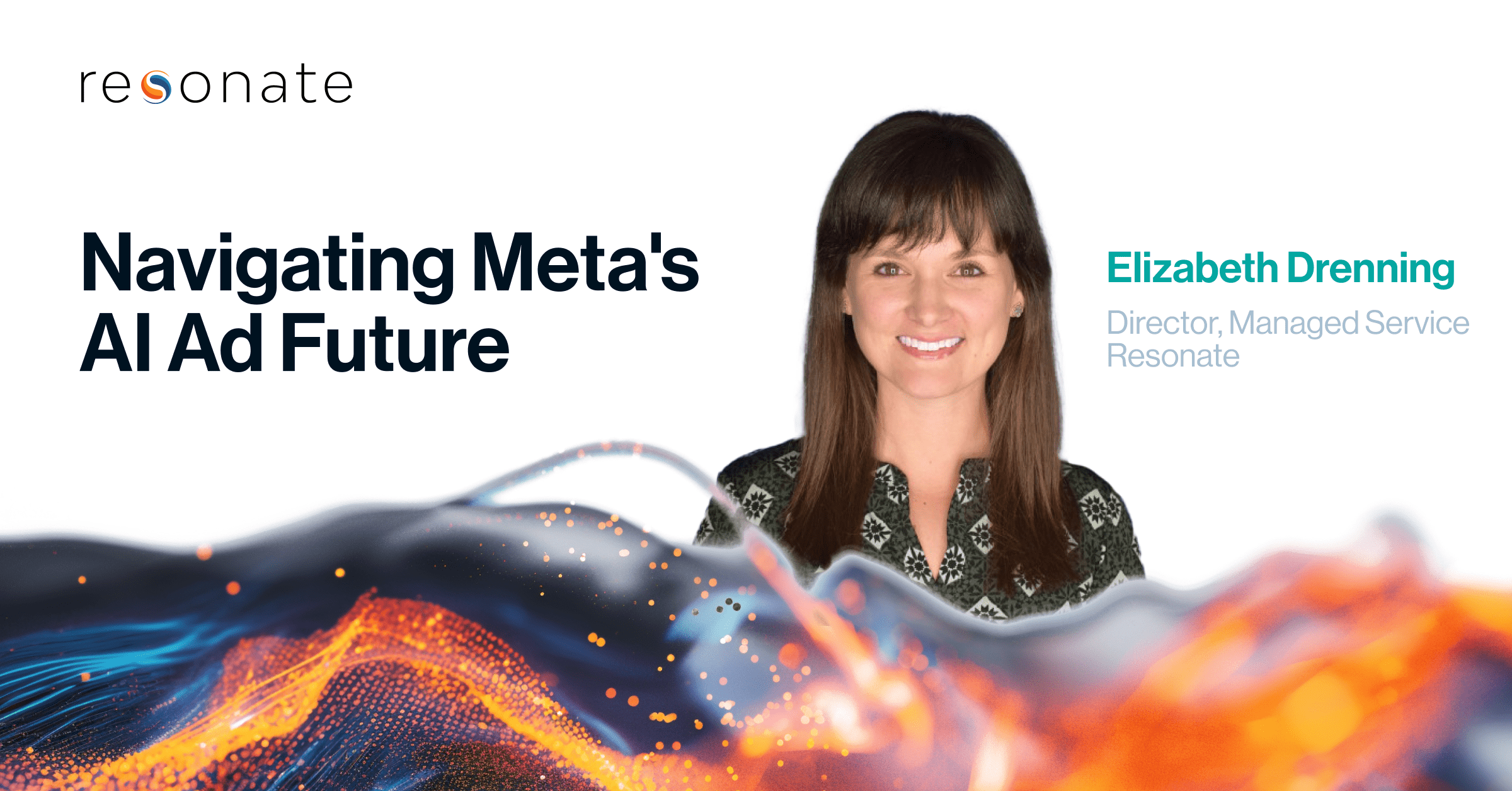
Elizabeth Drenning, Director of Managed Service at Resonate, acknowledges that for teams that rely on human nuances like brand voice, high-value segments, or creative intent, this change feels less like an upgrade and more like a black box. The place to start, however, is with your data.
“Meta’s algorithms are only as smart as the signals they’re trained on,” says Drenning. “If you’re relying solely on Meta’s native data, you risk diluted targeting, irrelevant creative, and off-brand messaging.”
But Drenning explains that automation won’t hurt your ability to reach the right audience with the right message if you bring your own data, “especially data that gives you an individualized understanding of who your customers are and what they will do next.”
This level of understanding is called predictive consumer intelligence, and it allows you to take back control. It gives you the ability to know every consumer as a unique individual and predict what they’ll do next, before they do it. You’re operating based on insights not just into who your current customers are, but who your next “best customer” is, giving you the ability to acquire better customers, keep them longer, and grow their value over time.
Meta, for instance, excels at predicting the what (e.g. who clicked), but not the why (e.g. their motivations). It’s the latter piece that gives your AI the missing context to perform and convert better. With predictive consumer intelligence, you can use psychographics, values, and intent to inform asset creation. You’ll build high-propensity audiences that enrich the surface-level demographics Meta uses when it isn’t trained on your data. This in effect forces Meta to spend budget where it matters and eliminate guesswork and iterations that waste time and money.
Let’s take a look at a use case to better understand the power of great data.
When Better Data Changes Everything: A Higher Education Case Study
A higher education institution was struggling to grow enrollment despite consistent media investment. The problem was not their messaging or their channels. It was their starting point.
By layering predictive consumer intelligence onto their existing data, the institution uncovered the motivational signals that demographic profiles could not surface: the values, aspirations, and intent indicators that separated a student who was ready to commit from one who was still early in their consideration or unlikely to convert at all.
That deeper understanding revealed new audience segments they had not previously considered. These were prospective students who shared the motivational profile of their best enrollees but fell entirely outside the demographic boundaries the institution had historically targeted.
Media was reallocated toward these higher-propensity audiences, and messaging was shaped around what the intelligence revealed rather than broad enrollment themes. The institution did not just improve performance. It outperformed its initial enrollment goals, driven by audiences it would never have found with more generic intelligence feeding Meta-style ad automation.
How Resonate Helps Agencies and Brands Stay in Control of Their Message
Resonate’s continuously updated predictive consumer intelligence is a critical step toward improving ROAS, but that can only happen if you’re ready to act on the data. That’s why we also have experts with an intimate knowledge of our data to run your media campaigns for you.
“We elevate, not automate, creative control by starting with intent-driven insights and messaging,” Elizabeth says. “Generic ads are the death of ROI. Resonate empowers you to design creative based on what people care about most before launch.”
With Resonate Managed Service, our team will work with you to define your ideal consumer using future intent and motivation data. Then, we’ll limit waste by feeding Meta only high-LTV audiences and direct every automated dollar toward profitable outcomes.
For agencies, this means the ability to take on more new business. “We’re an extra team for marketing agencies, even those that already have a media team. Our experts have a deep insider understanding of predictive consumer intelligence, meaning we can act as a force multiplier for your campaigns. We’ll help you identify the right audiences and understand them, and we also know where and how to reach them, ensuring you drive growth and avoid wasting media spend,” Drenning says.
How Managed Service Helps Agencies Transform Their Business
A mid-size independent agency wins a competitive pitch with a regional healthcare system that needs to grow new patient volume across three service lines simultaneously. The account is exactly the kind of multi-channel, performance-driven engagement the agency has been building toward. There’s just one problem: The team is already at capacity.
Rather than turn down the business, the agency activates Managed Service. Resonate’s team takes on the end-to-end media execution for the healthcare client, building precise audiences grounded in predictive consumer intelligence, running campaigns across CTV, pre-roll, display, and social, and optimizing in-flight based on real-time performance signals. The agency retains the strategic relationship with the client. They set the goals, approve the audience strategy, and own the reporting conversation. Resonate handles the operational execution.
But it’s not just lending a hand to pick up the slack; the Managed Service team gives the agency the capacity and the data differentiator that matters in the era of ad automation For the client, the experience is indistinguishable from what a fully staffed in-house team would deliver, except that the audiences performing against their new patient volume goals are built on 15,000-plus individual-level attributes, not demographic approximations that automated advertising like Meta’s favor. The agency can show the client exactly who is being reached and why, grounded in motivational and intent data that most healthcare campaigns never have access to. That transparency becomes a differentiator in the client relationship, not just a reporting footnote.
For the agency, the math changes in two important ways. First, they take on a high-value account without adding headcount or burning out the team they already have. Second, the media execution produces results the client can see, because the intelligence behind the targeting is stronger than what the client could source elsewhere. That performance becomes the case for renewal, expansion, and eventually a deeper data partnership.
Twelve months later, the healthcare client has grown from a project engagement to a retainer relationship covering multiple service lines, a new patient acquisition model, and a site visitor intelligence program that feeds ongoing campaign optimization. The agency’s revenue from the account has more than doubled since the initial pitch.
None of it required the agency to build a media operations function from scratch or to rely on Meta’s generic targeting. It required them to bring the right partner to the table and focus their own team on what they do best: strategy, creative, and the client relationship that keeps the business in-house.
Ready to Thrive in the Future of Advertising?
AI automation is here to stay, and it’s only getting more advanced. But with the right data, you don’t have to fear AI; you can direct it. Resonate helps marketers keep their eye on what really matters: real people, real insight, and real outcomes with trusted, dynamic, predictive consumer intelligence at the core. Learn more about how Resonate’s Managed Service can help you navigate the future of advertising here.